Epilogue. Back to the Wild Land: The Courage to Abandon Perfect Control
1. The Zoo Hypothesis: Are We Keeping Children in Captivity?
Humanity in the 21st century has built the safest, most efficient, and most connected civilization in history. We have eliminated hunger from children, driven out diseases, and wiped away the dirt. Smartphones place all knowledge in the palm of a hand, and GPS tracks a child's location within a one-meter margin of error. On the surface, this is a utopia.
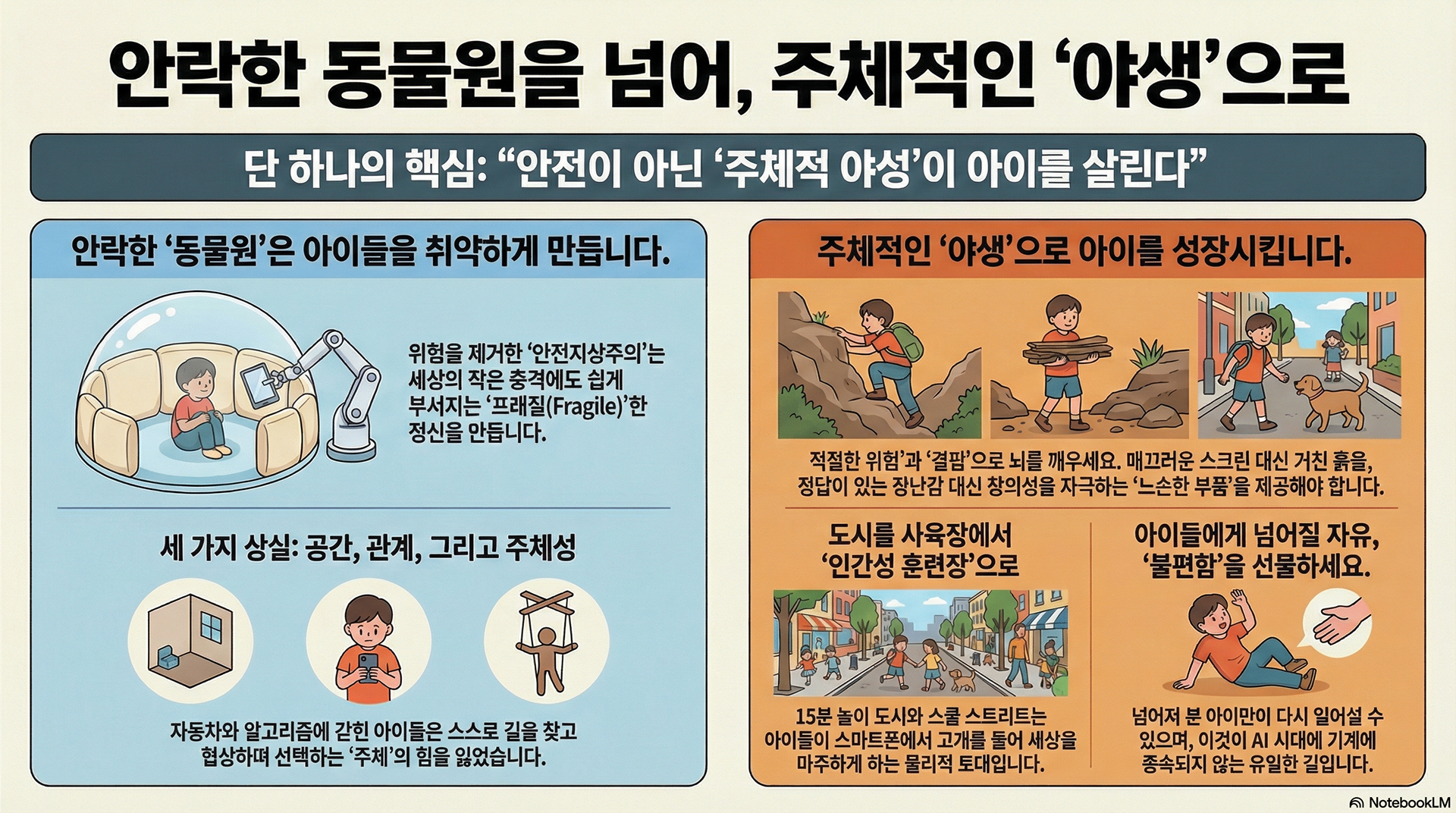
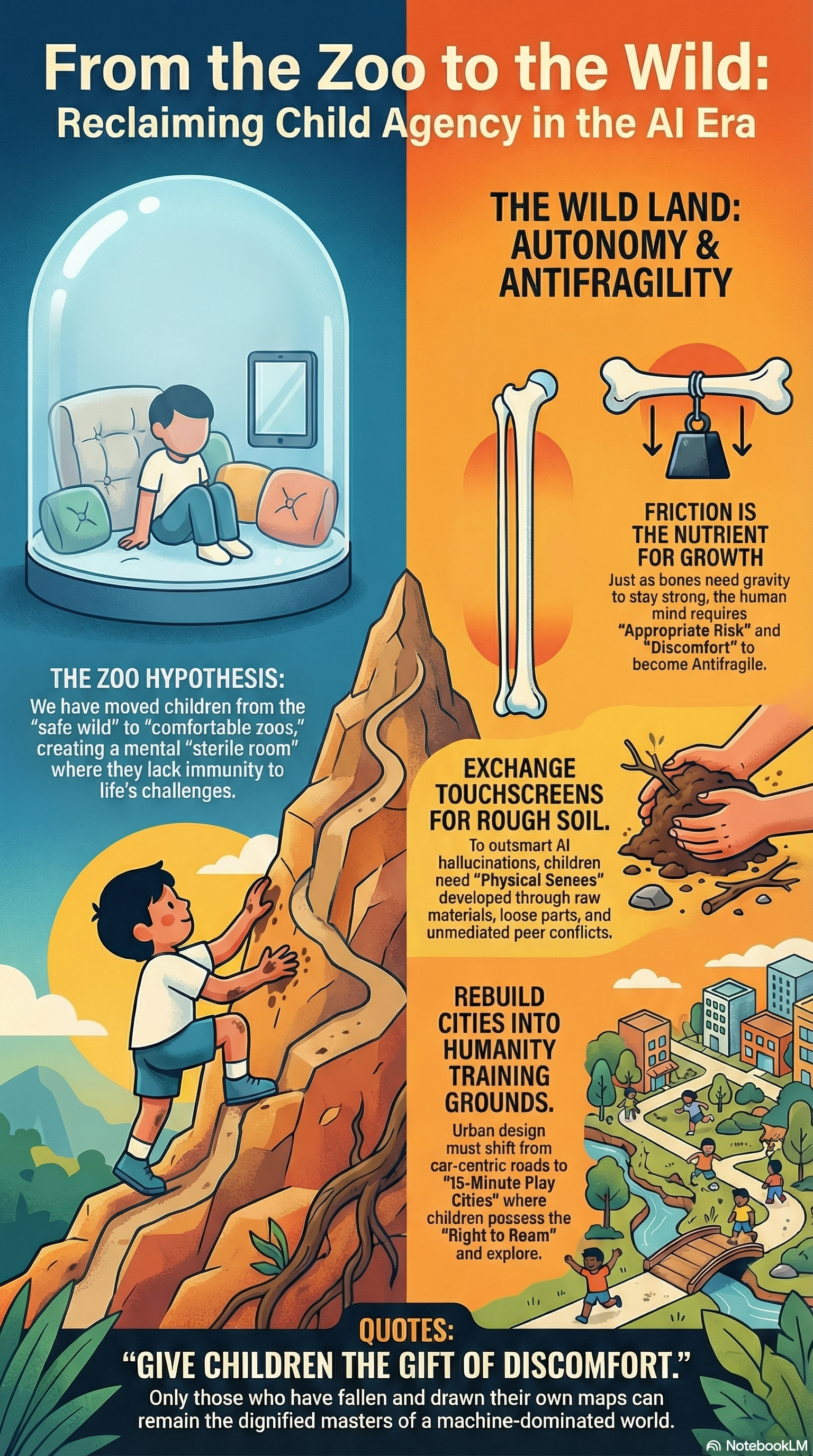
However, the truth we have witnessed from Chapter 1 to Chapter 16 is chilling. We have moved children from the "Safe Wild" to a "Comfortable Zoo." Like animals that have forgotten how to hunt and only wait for feed from the zookeeper, our children have forgotten how to find their own way (Wayfinding), lost the ability to resolve conflicts (Negotiation), and lost the capacity to endure boredom (Endurance).
Safetyism and Digital Convenience, which we believed to be "love," were in reality a massive "Sterile Room" encroaching upon children's souls. Just as an immune system raised in a sterile room reacts hypersensitively even to pollen, the minds of children raised without friction have become "Fragile," breaking easily even at the world's smallest shocks.
2. Three Losses: Space, Connection, and Self
The tragedy penetrating this book can be summarized as losses in three dimensions.
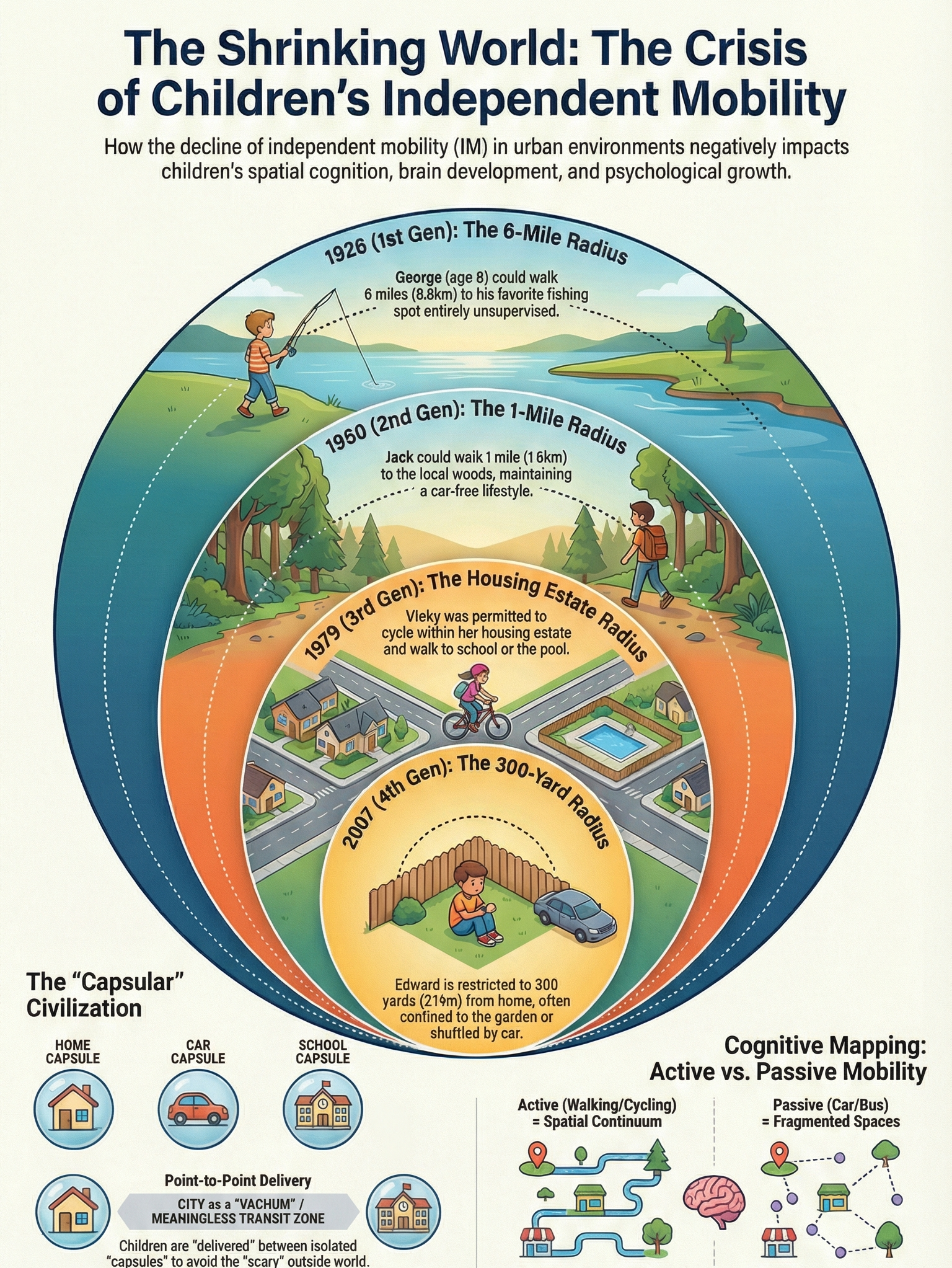
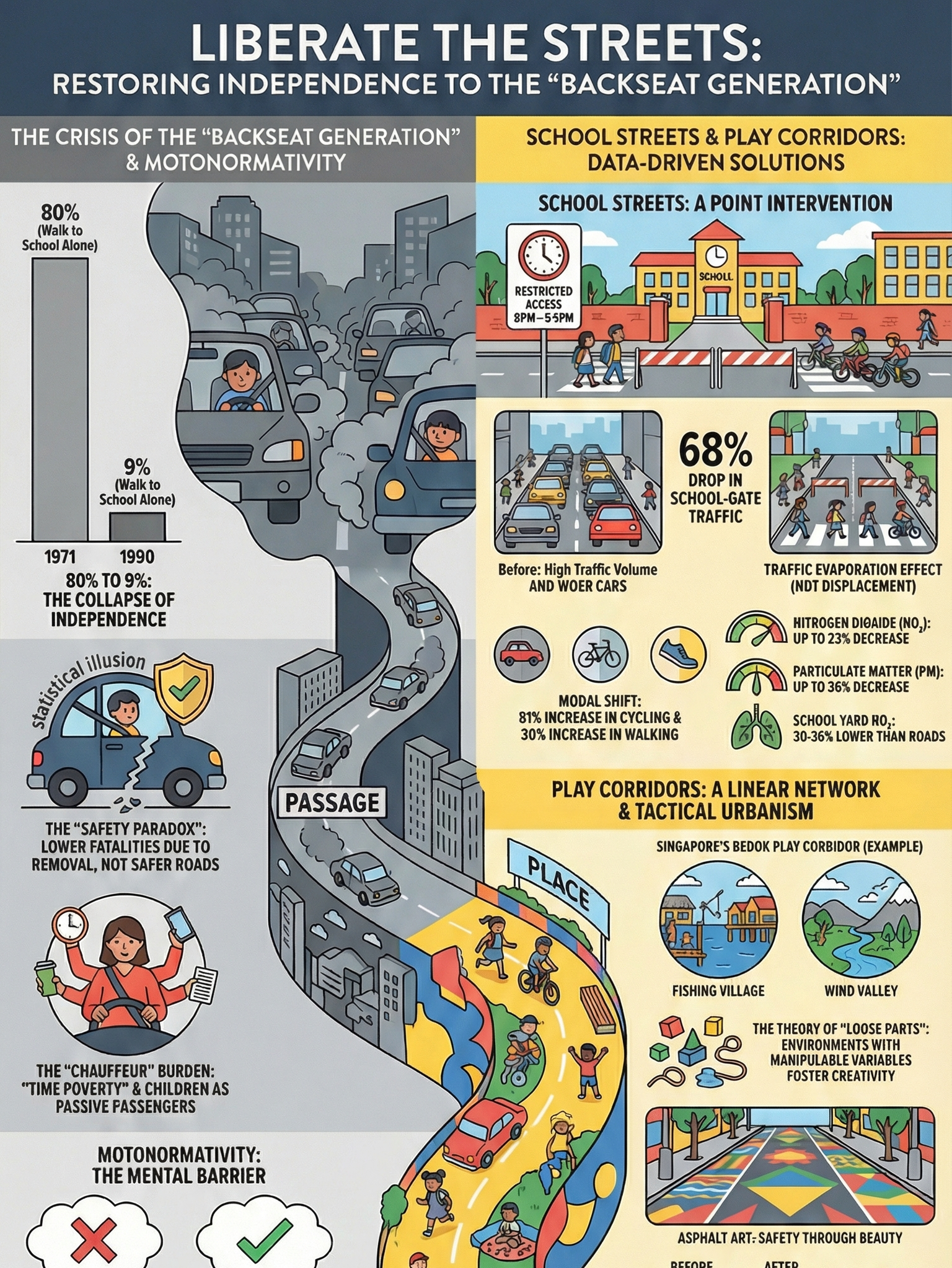
• The Loss of Space: Motonormativity drove children off the streets and confined them to the backseat. The neighborhood, once walkable within 15 minutes, became a collection of fragmented dots, and children became strangers disconnected from the land they stand on.
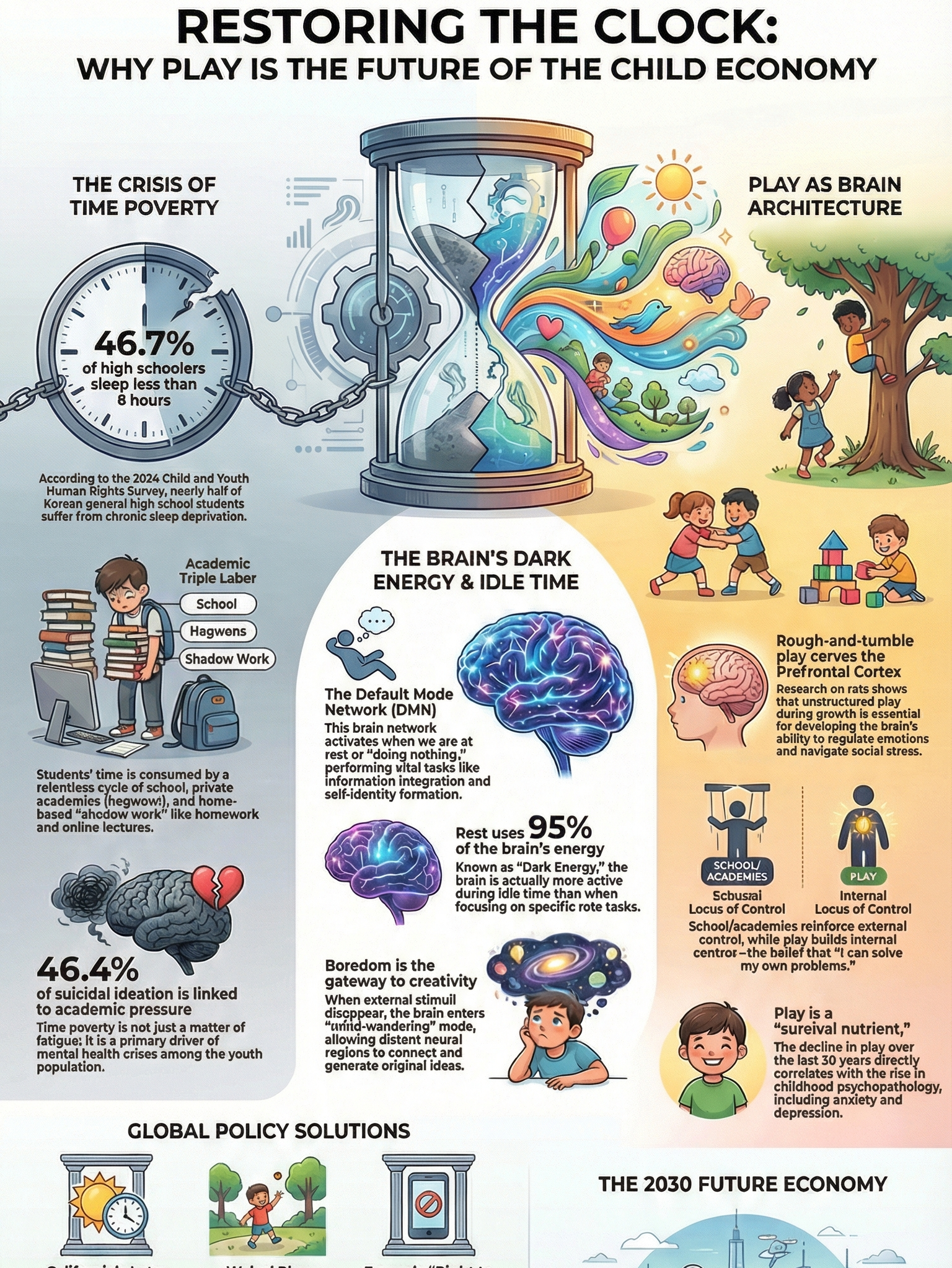
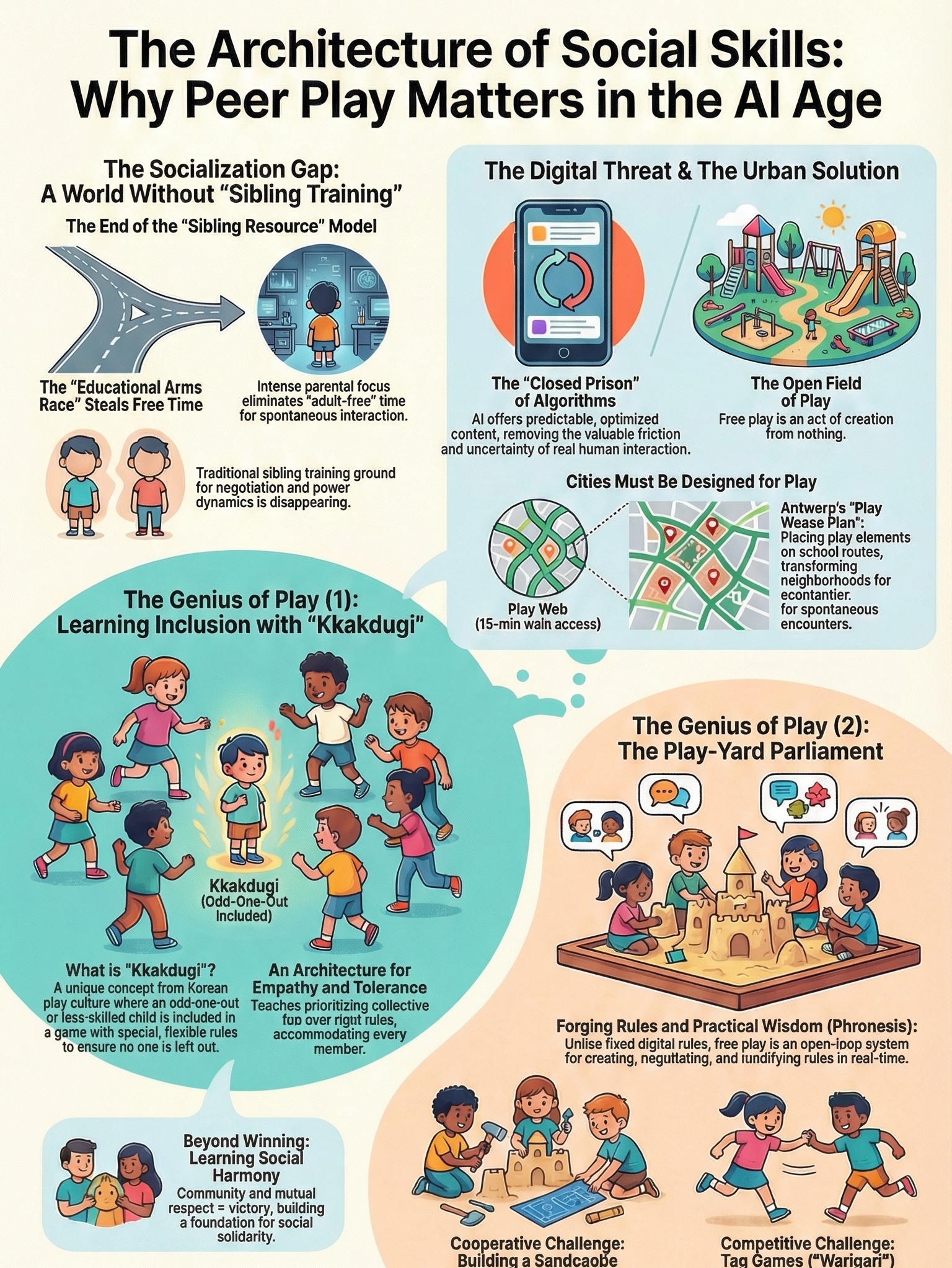
• The Loss of Connection: The Digital Bubble and excessive learning labor (Shadow Work) isolated children. In the place where the fierce "politics" and "negotiation" of adult-free playgrounds vanished, only the personalized pleasure and lonely competition provided by algorithms remain.
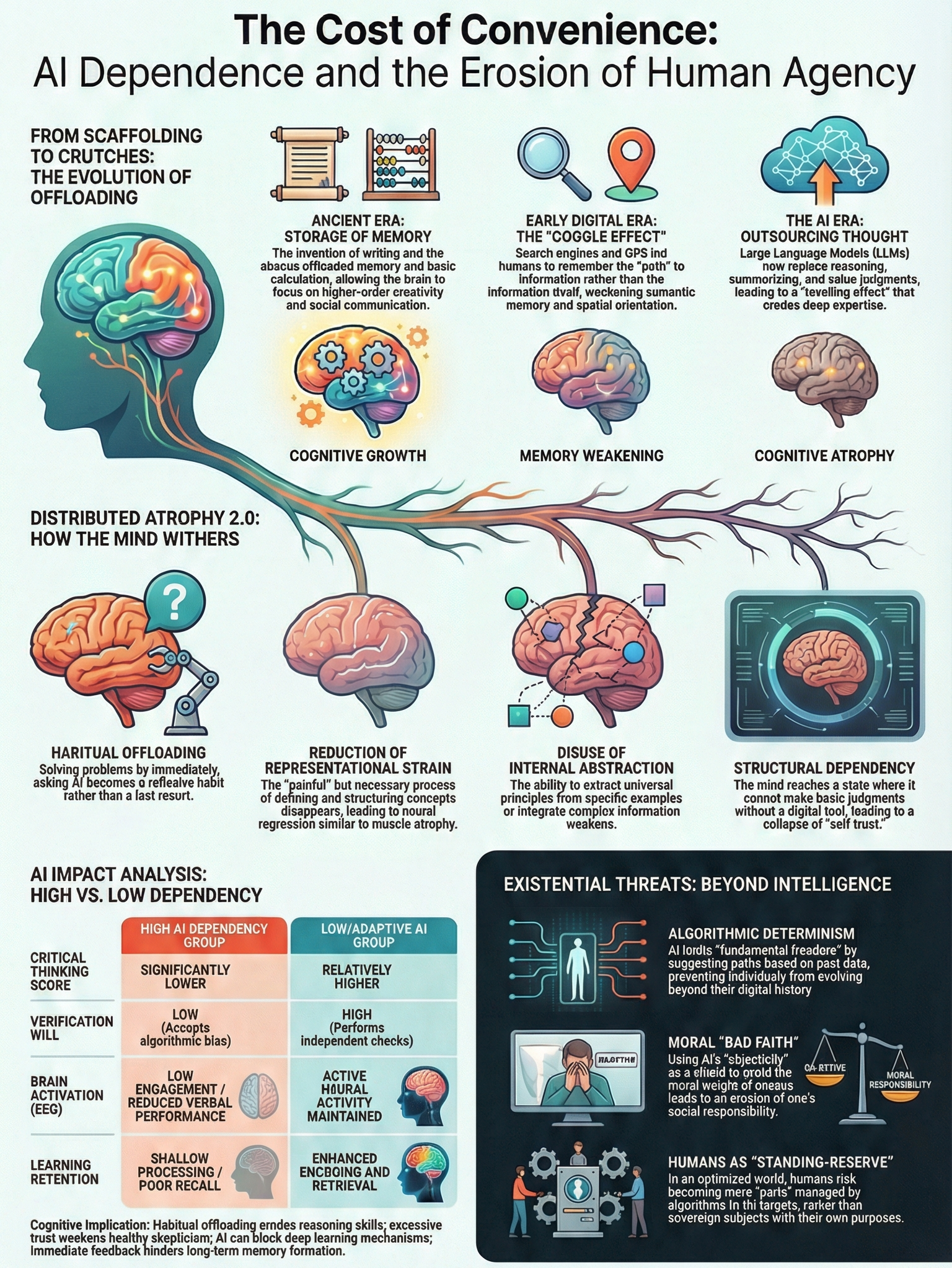
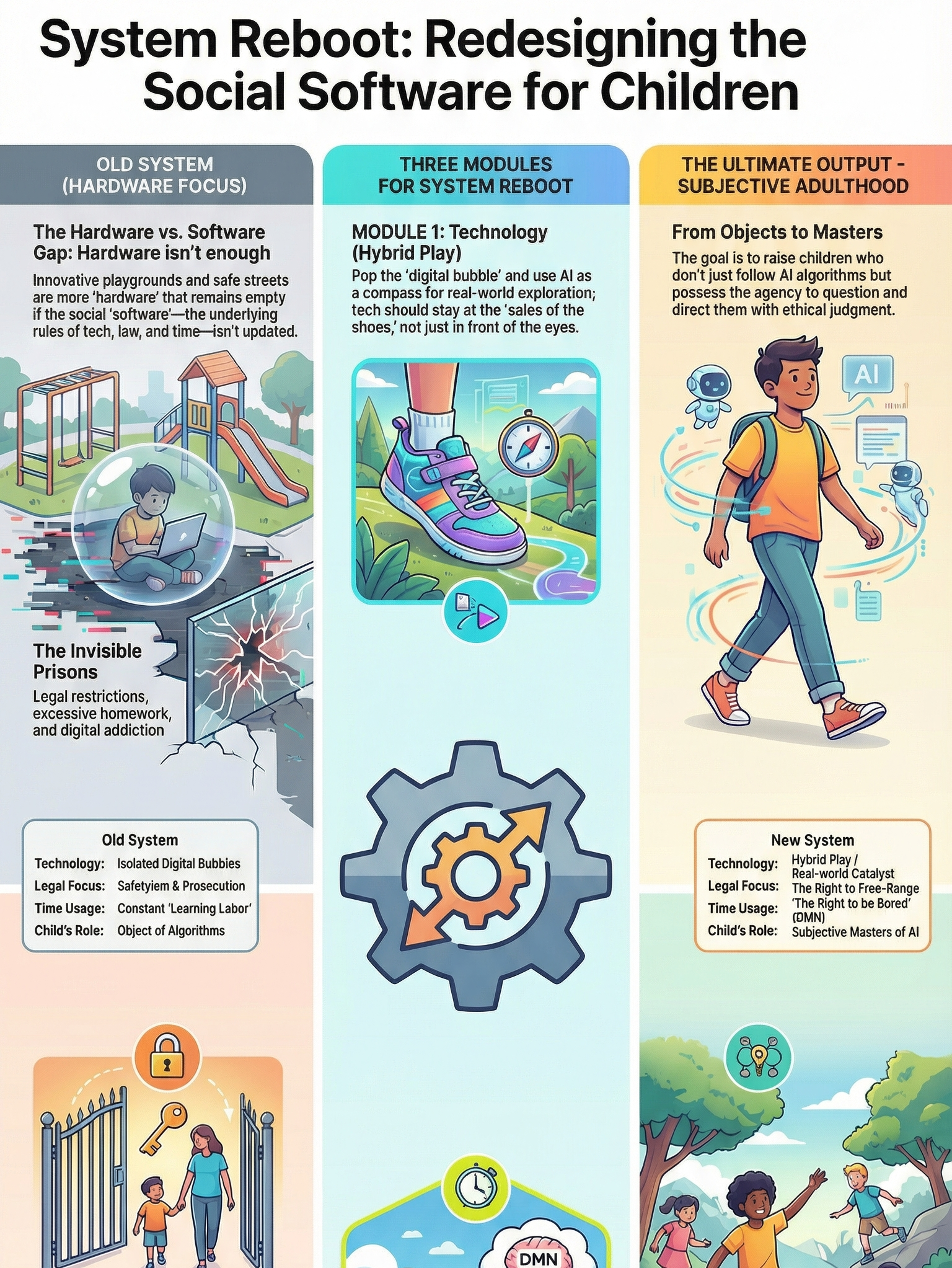
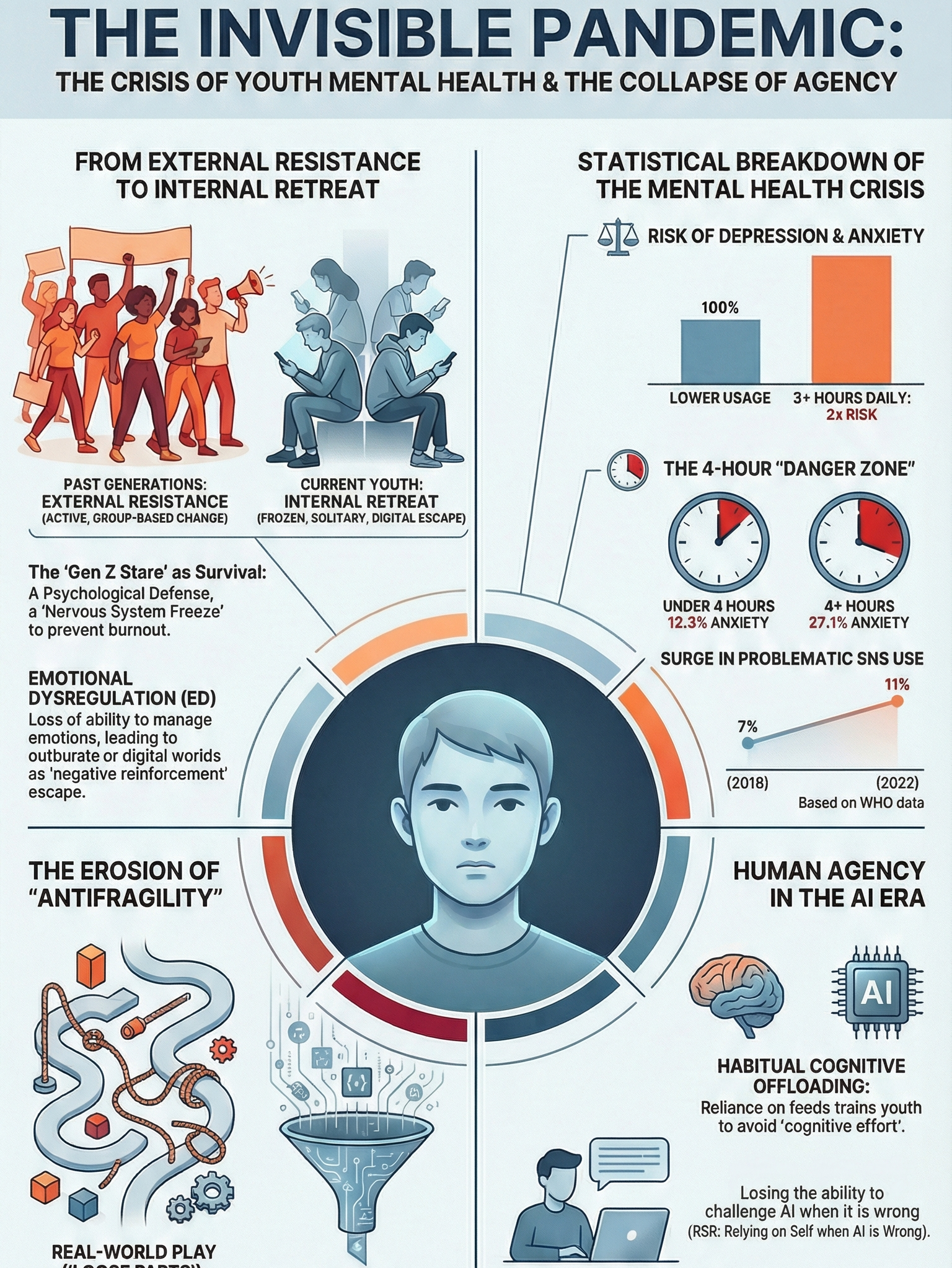
• The Loss of Agency: This is the most fatal. In a world where AI gives answers, navigation gives routes, and parents organize schedules, children have degraded from "subjects who choose" to "objects who perform".
3. Recovery of Antifragility: Wounds Become Armor
However, we do not have time to remain pessimistic. A massive wave called Artificial Intelligence has already arrived before us. The only talent that will not be swept away by this wave is the "Subjective Adult" who knows how to row against it.
We must now restore the principle of "Antifragility."
Bones become solid only by withstanding gravity, and muscles become strong after the pain of tearing. Similarly, children's brains and minds grow by feeding on "Manageable Risk" and "Deprivation."
• Rough Soil Instead of Smooth Touchscreens: In a digital world where Hallucinations run rampant, the power to discern the truth comes solely from "Embodied Sense."
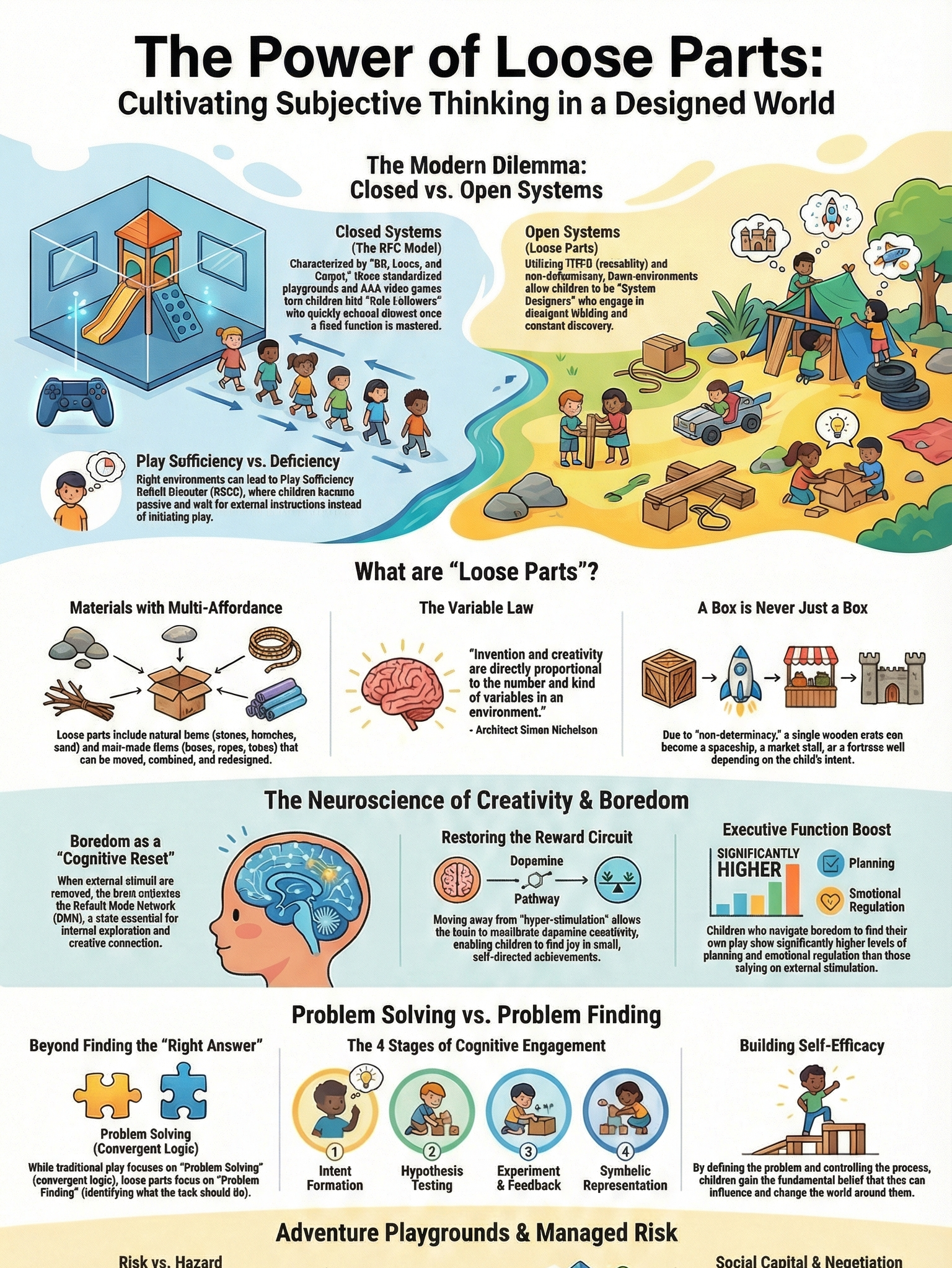
• Loose Parts Instead of Finished Toys: What is needed in the AI era without set answers is "Divergent Thinking" that imagines a spaceship amidst a pile of trash.
• Children’s Fights Instead of Adult Mediation: The ethical muscle to confront algorithmic bias is cultivated in the process of blushing while "negotiating" rules with friends.
4. Rebuilding the City: From Enclosure to Training Ground
The saying "It takes a whole village to raise a child" must now be revised. "To raise a single child into a subjective human being, the design of the entire city must change."
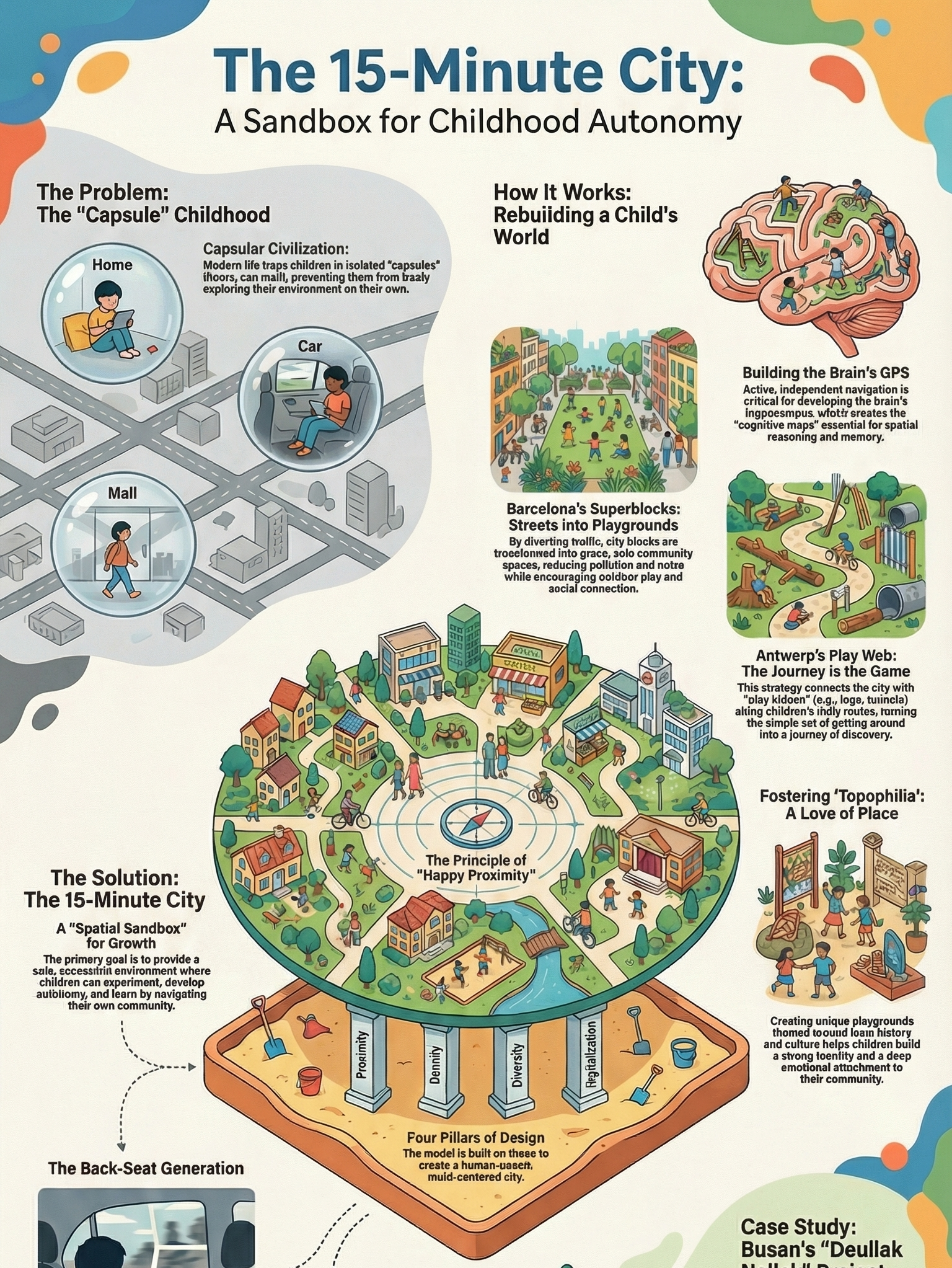
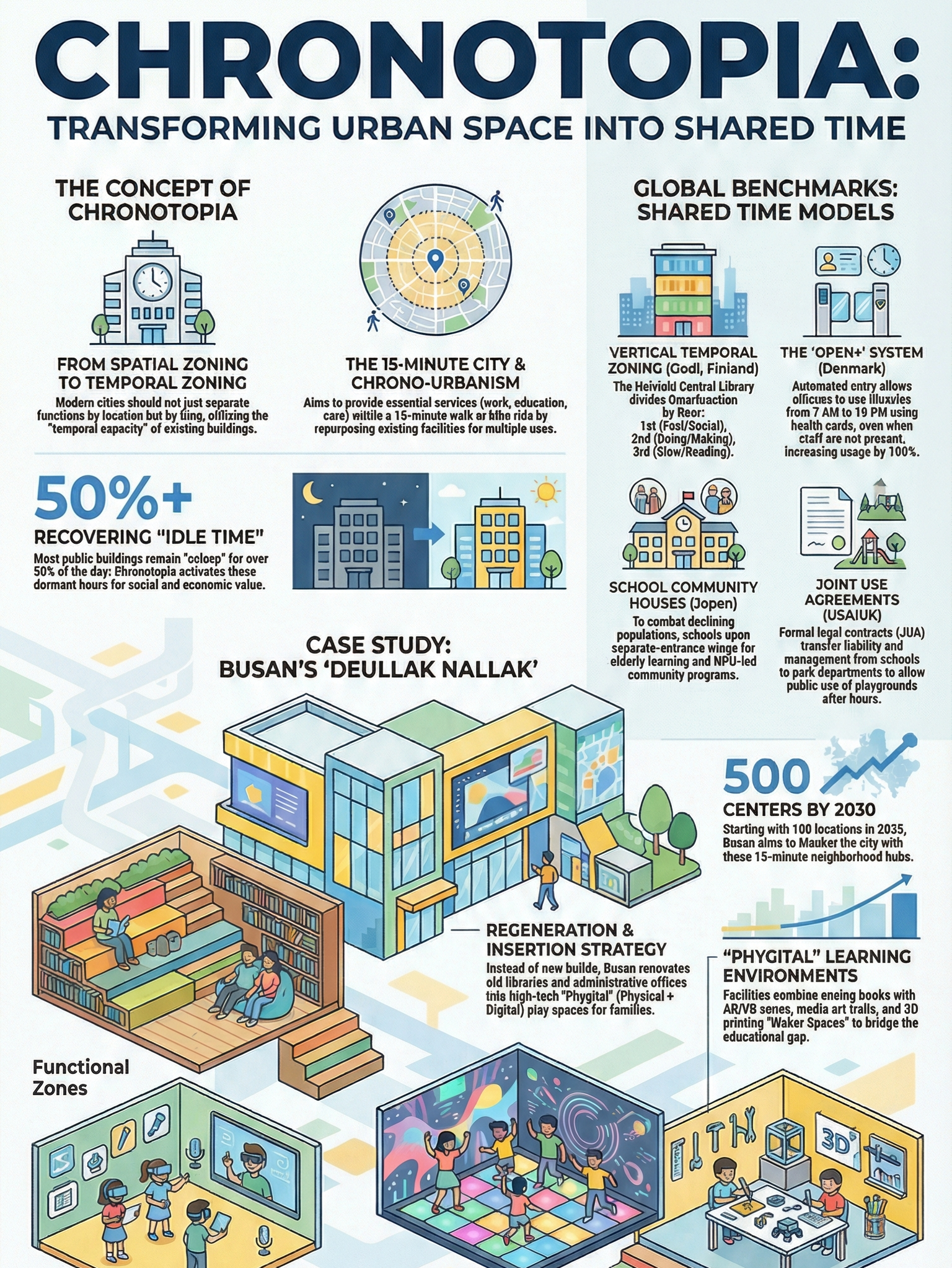
The 15-Minute Play City, School Streets, Hub Playgrounds, and Chronotopia we proposed are not simple urban regeneration projects. This is a task of remodeling the entire city into a massive "Training Ground for the Recovery of Humanity."
A city where there is a Pocket Core to run and play safely within 5 minutes of opening the front door, where school walls are broken down (Chronotopia) to mix generations, and where streets are filled with children's laughter instead of cars (School Street). Only on such physical infrastructure can children finally lift their heads from smartphones (Heads-Up) and face the world.
5. Final Proposal: The Courage to Allow Discomfort
I earnestly appeal to readers, parents, and policymakers.
Gift "discomfort" to children.
Instead of the comfort of a car, allow the toil of walking; instead of the answers from an academy, allow the boredom of having nothing to do; instead of the safety provided by parents, allow the freedom to fall. The moment we let go of the strings of control, children's growth begins.
Artificial Intelligence can provide perfect answers, but judging what meaning that answer has for my life is ultimately the role of the "Scarred Human." Only the child who has fallen and scraped their knee knows how to stand up again, and only the child who has been lost can draw a new map.
Now, let us liberate our children from the comfortable zoo and return them to the "Wild Land" where they willingly cover themselves in dust and sweat. That rough playground is the only Sanctuary of hope where we, humanity, can remain not as subordinates to machines, but as eternally dignified masters.
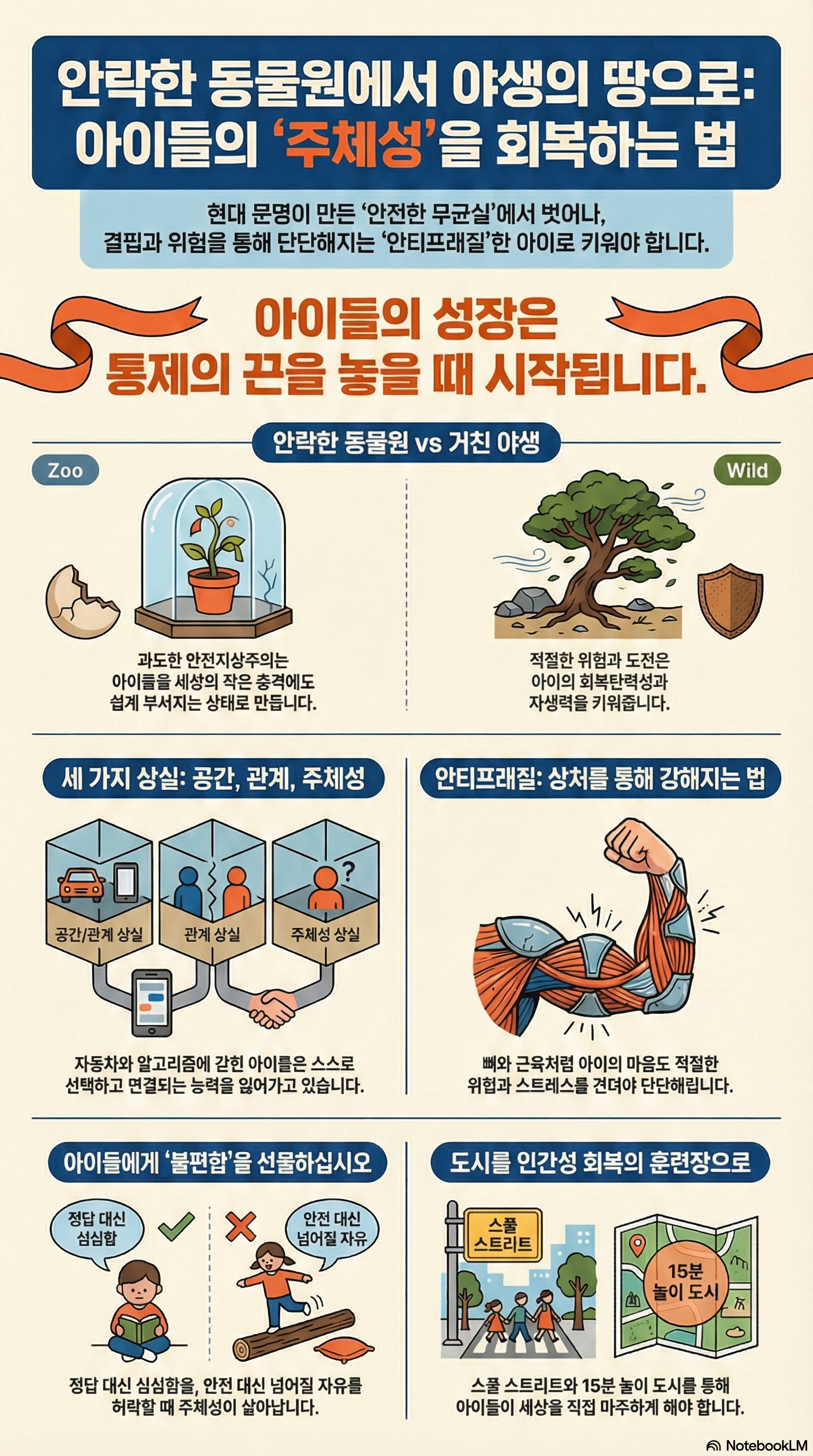
에필로그. 다시, 야생의 땅으로: 완벽한 통제를 포기할 용기
1. 동물원 가설: 우리는 아이들을 사육하고 있는가
21세기 인류는 역사상 가장 안전하고, 가장 효율적이며, 가장 연결된 문명을 건설했다. 우리는 아이들에게서 배고픔을 없애고, 질병을 몰아냈으며, 흙먼지를 닦아냈다. 스마트폰은 모든 지식을 손안에 쥐여주었고, GPS는 아이의 위치를 1미터 오차 내로 추적한다. 표면적으로 이것은 유토피아다.
그러나 1장부터 16장까지 우리가 목격한 진실은 서늘하다. 우리는 아이들을 **'안전한 야생'**에서 **'안락한 동물원'**으로 옮겨놓았다. 스스로 사냥하는 법을 잊고 사육사가 주는 먹이만을 기다리는 동물처럼, 우리 아이들은 스스로 길을 찾는 법(Wayfinding)을 잊고, 갈등을 해결하는 법(Negotiation)을 잃었으며, 지루함을 견디는 법(Endurance)을 상실했다.
우리가 '사랑'이라 믿었던 **안전지상주의(Safetyism)**와 디지털 편의주의는, 실상은 아이들의 영혼을 잠식하는 거대한 **'무균실'**이었다. 무균실에서 자란 면역계가 꽃가루에도 과민반응을 일으키듯, 마찰 없이 자란 아이들의 정신은 세상의 작은 충격에도 쉽게 부서지는 **'프래질(Fragile)'**한 상태가 되어버렸다.
2. 세 가지 상실: 공간, 관계, 그리고 나
이 책을 관통하는 비극은 세 가지 차원의 상실로 요약된다.
공간의 상실(The Loss of Space): 자동차 중심주의(Motonormativity)는 아이들을 거리에서 몰아내고 뒷좌석에 가두었다. 15분이면 걸어갈 수 있는 동네는 파편화된 점들의 집합이 되었고, 아이들은 자신이 발 딛고 선 땅과 연결되지 못한 이방인이 되었다.
관계의 상실(The Loss of Connection): 디지털 버블과 과도한 학습 노동(Shadow Work)은 아이들을 고립시켰다. 어른이 없는 놀이터에서 벌어지는 치열한 '정치'와 '협상'이 사라진 자리에는, 알고리즘이 제공하는 맞춤형 쾌락과 고독한 경쟁만이 남았다.
주체성의 상실(The Loss of Agency): 이것이 가장 치명적이다. AI가 답을 주고, 내비게이션이 길을 주고, 부모가 스케줄을 짜주는 세상에서 아이들은 '선택하는 주체'가 아니라 '수행하는 객체'로 전락했다.
3. 안티프래질의 회복: 상처가 곧 갑옷이다
그러나 우리는 비관만 하고 있을 시간이 없다. 인공지능이라는 거대한 파도가 이미 우리 앞에 당도했기 때문이다. 이 파도에 휩쓸리지 않을 유일한 인재는, 파도에 맞서 노를 저을 줄 아는 **'주체적 성인'**뿐이다.
우리는 이제 **'안티프래질(Antifragile)'**의 원리를 복원해야 한다. 뼈는 중력을 견뎌야 단단해지고, 근육은 찢어지는 고통 후에 강해진다. 마찬가지로 아이들의 뇌와 마음도 **'적절한 위험(Risk)'**과 **'결핍'**을 먹고 자란다.
매끄러운 터치스크린 대신 거친 흙을: 환각(Hallucination)이 판치는 디지털 세상에서 진실을 가려낼 힘은 오직 **'신체 감각'**에서 온다.
완결된 장난감 대신 느슨한 부품을: 정답이 없는 AI 시대에 필요한 것은, 쓰레기 더미 속에서 우주선을 상상해내는 **'확산적 사고'**다.
어른의 중재 대신 아이들의 싸움을: 알고리즘의 편향에 맞설 윤리적 근육은, 친구와 얼굴을 붉히며 규칙을 **'협상'**하는 과정에서 길러진다.
4. 도시의 재건: 사육장에서 훈련장으로
아이 하나를 키우려면 온 마을이 필요하다는 말은 이제 수정되어야 한다. "아이 하나를 주체적 인간으로 키우려면 온 도시의 설계가 바뀌어야 한다."
우리가 제안한 15분 놀이 도시, 스쿨 스트리트, 허브 플레이그라운드, 크로노토피아는 단순한 도시 재생 프로젝트가 아니다. 이것은 도시 전체를 거대한 **'인간성 회복의 훈련장'**으로 개조하는 작업이다.
집 문을 열면 5분 안에 안전하게 뛰어놀 수 있는 포켓 코어가 있고, 학교 담장이 허물어져(Chronotopia) 세대가 섞이며, 거리가 자동차가 아닌 아이들의 웃음소리로 채워지는(School Street) 도시. 이런 물리적 인프라 위에서만 아이들은 비로소 스마트폰에서 고개를 들어(Heads-Up) 세상을 마주할 수 있다.
5. 마지막 제언: 불편함을 허용할 용기
독자 여러분, 그리고 부모와 정책 입안자들에게 간곡히 호소한다. 아이들에게 '불편함'을 선물하라.
자동차가 주는 편안함 대신 걷기의 수고로움을, 학원이 주는 정답 대신 심심함의 지루함을, 부모가 주는 안전 대신 넘어질 자유를 허락하라. 우리가 통제의 끈을 놓는 그 순간, 아이들의 성장은 시작된다.
인공지능은 완벽한 답을 줄 수 있지만, 그 답이 내 삶에 어떤 의미가 있는지를 판단하는 것은 결국 **'상처 입어본 인간'**의 몫이다. 넘어져서 무릎이 깨져본 아이만이 다시 일어나는 법을 알고, 길을 잃어본 아이만이 새로운 지도를 그릴 수 있다.
이제 우리 아이들을 안락한 동물원에서 해방시켜, 기꺼이 흙먼지를 뒤집어쓰고 땀 흘리는 **'야생의 땅'**으로 돌려보내자. 그 거친 놀이터가 바로, 우리 인류가 기계에 종속되지 않고 영원히 존엄한 주인으로 남을 수 있는 유일한 희망의 성지(Sanctuary)다.