Preface to Part 3. In Search of the Lost City: From Isolation to Connection, From Efficiency to Sharing
1. The Trap of Functionalism: A City with Clogged Arteries
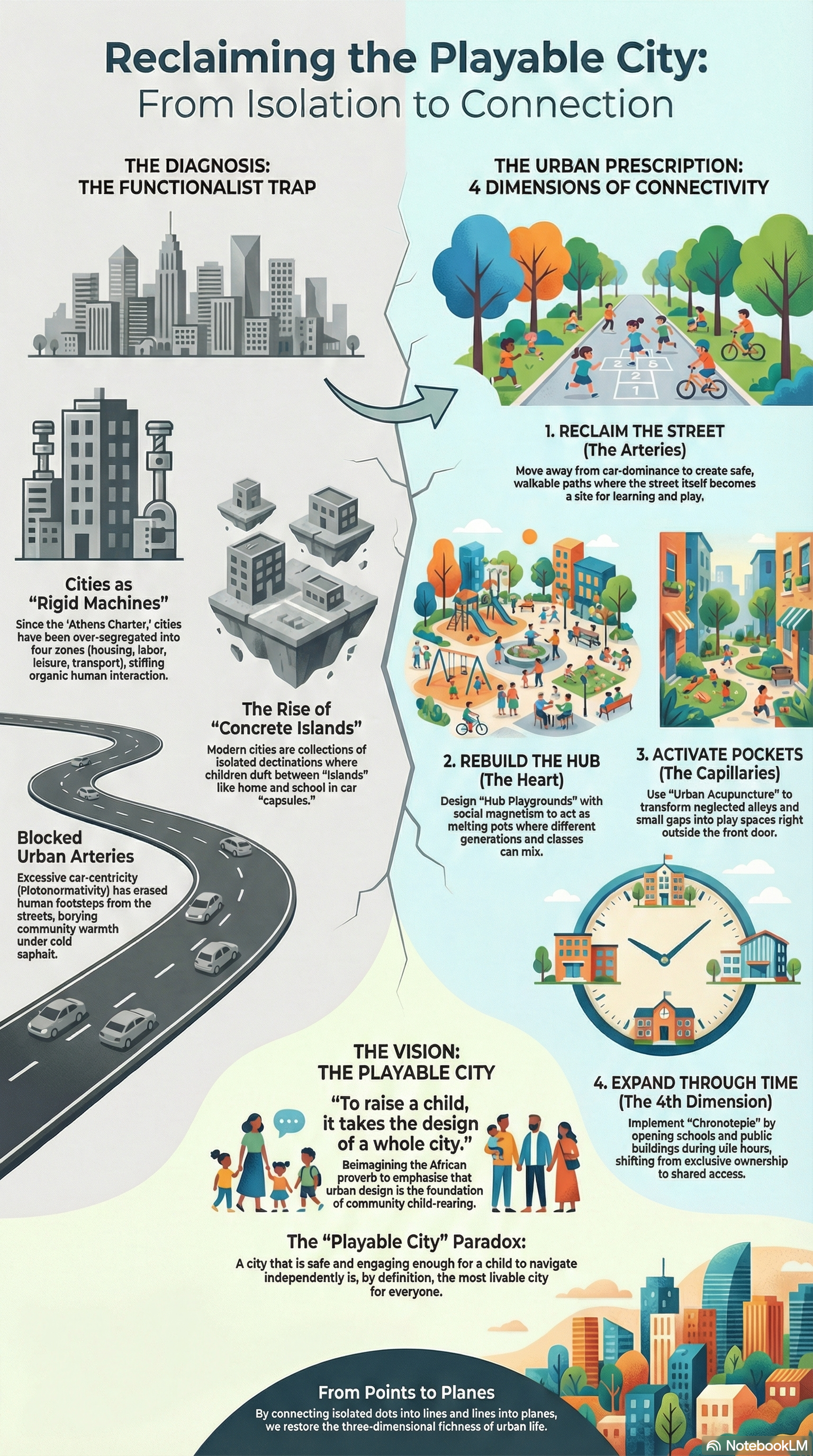
For the past century, we have treated the city like a giant machine. Since Le Corbusier's 'Athens Charter,' the city has been thoroughly separated (Zoning) into four functions: dwelling, work, recreation, and transportation. We constructed efficient road networks, but in doing so, we erased the 'human footstep' from those very paths.
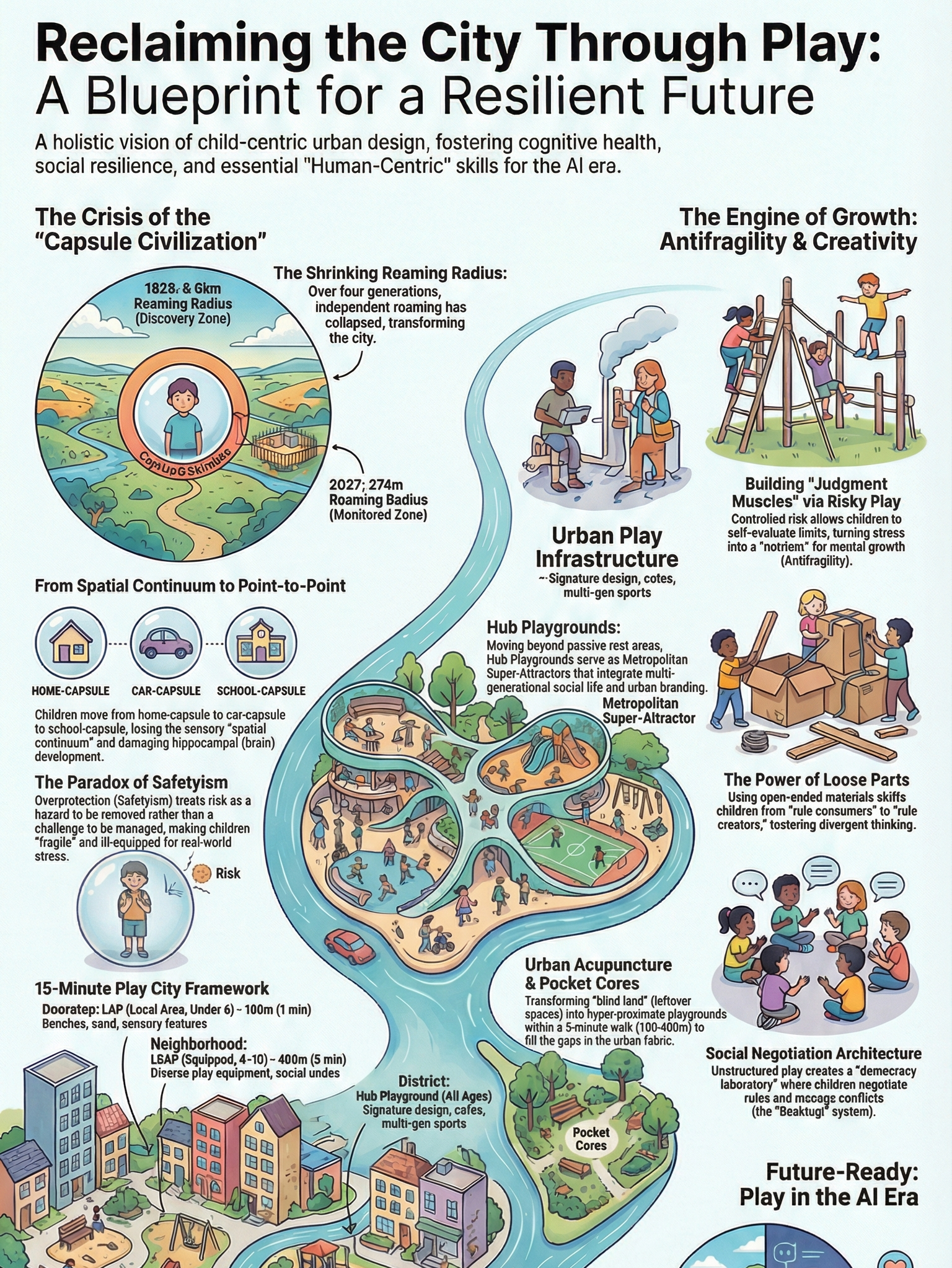
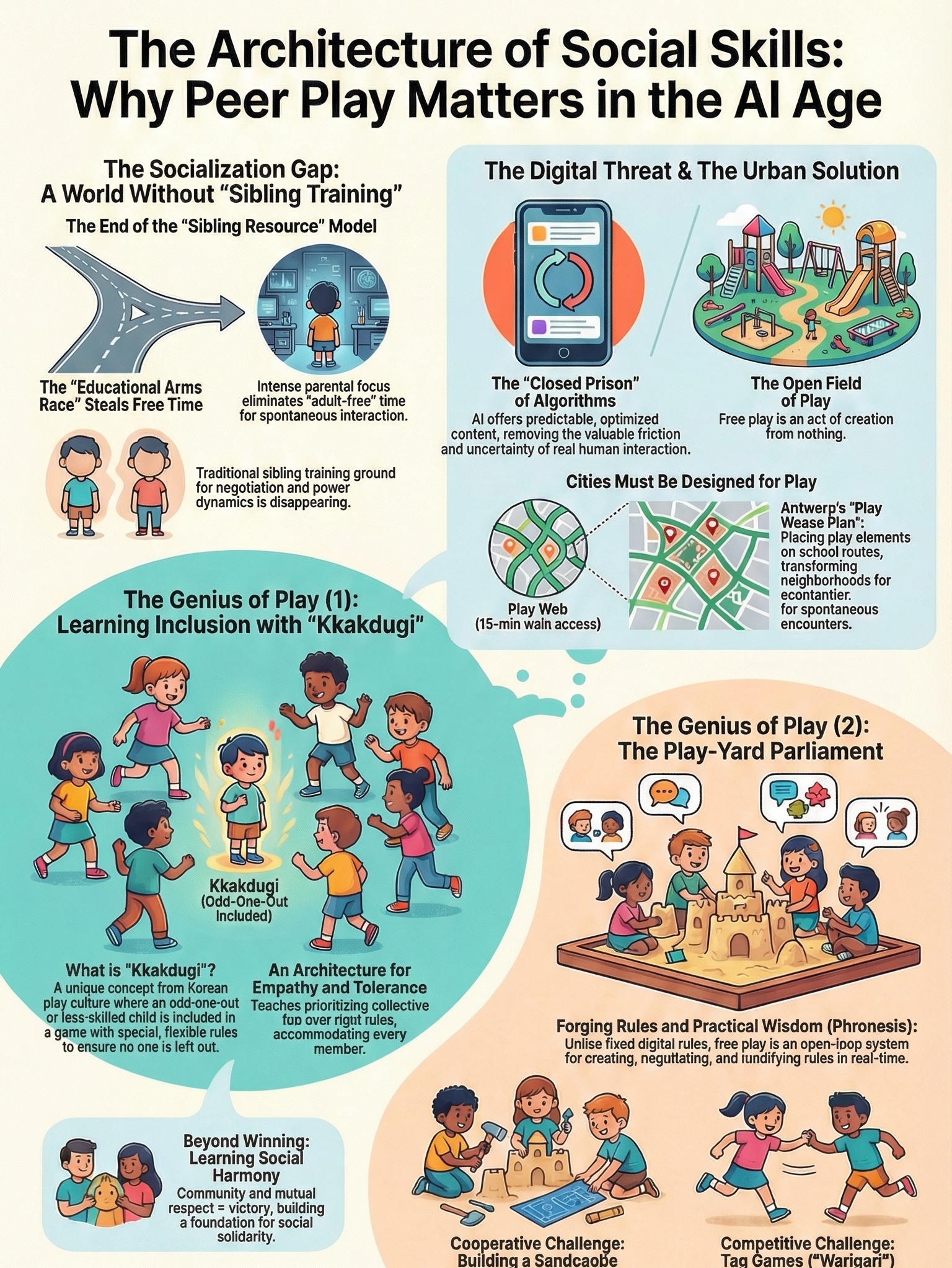
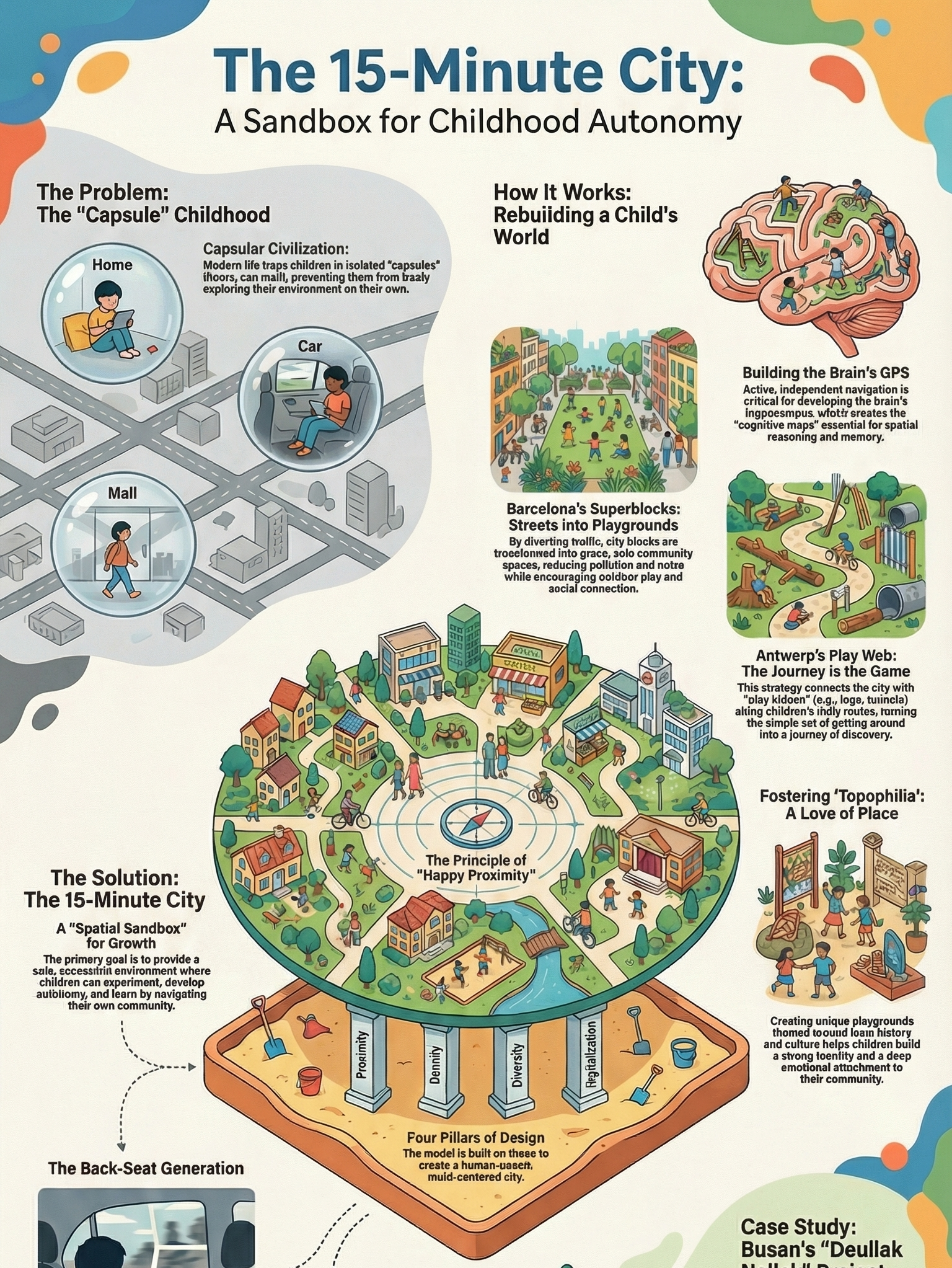
As a result, the city has become a collection of massive concrete islands. Children drift between the islands of 'school' and 'home' riding in the capsule known as the automobile. In this city where the arteries (streets) are clogged and the organs (public facilities) operate in isolation, the warmth of the community has been buried beneath cold asphalt.
2. Connecting Spaces: From Arteries to Capillaries
Part 3 serves as an 'urban prescription' to heal this ailing city. We must now redesign the city not as a functional machine, but as an organically connected 'living organism'.
To breathe life into a dying city, we must first connect the severed paths and unclog the blocked areas.
• Chapter 9 declares the liberation of the 'Street,' the city's artery. When we break 'Motonormativity' and return safe walking paths to children, the street becomes not merely a passageway, but a site for learning and play.
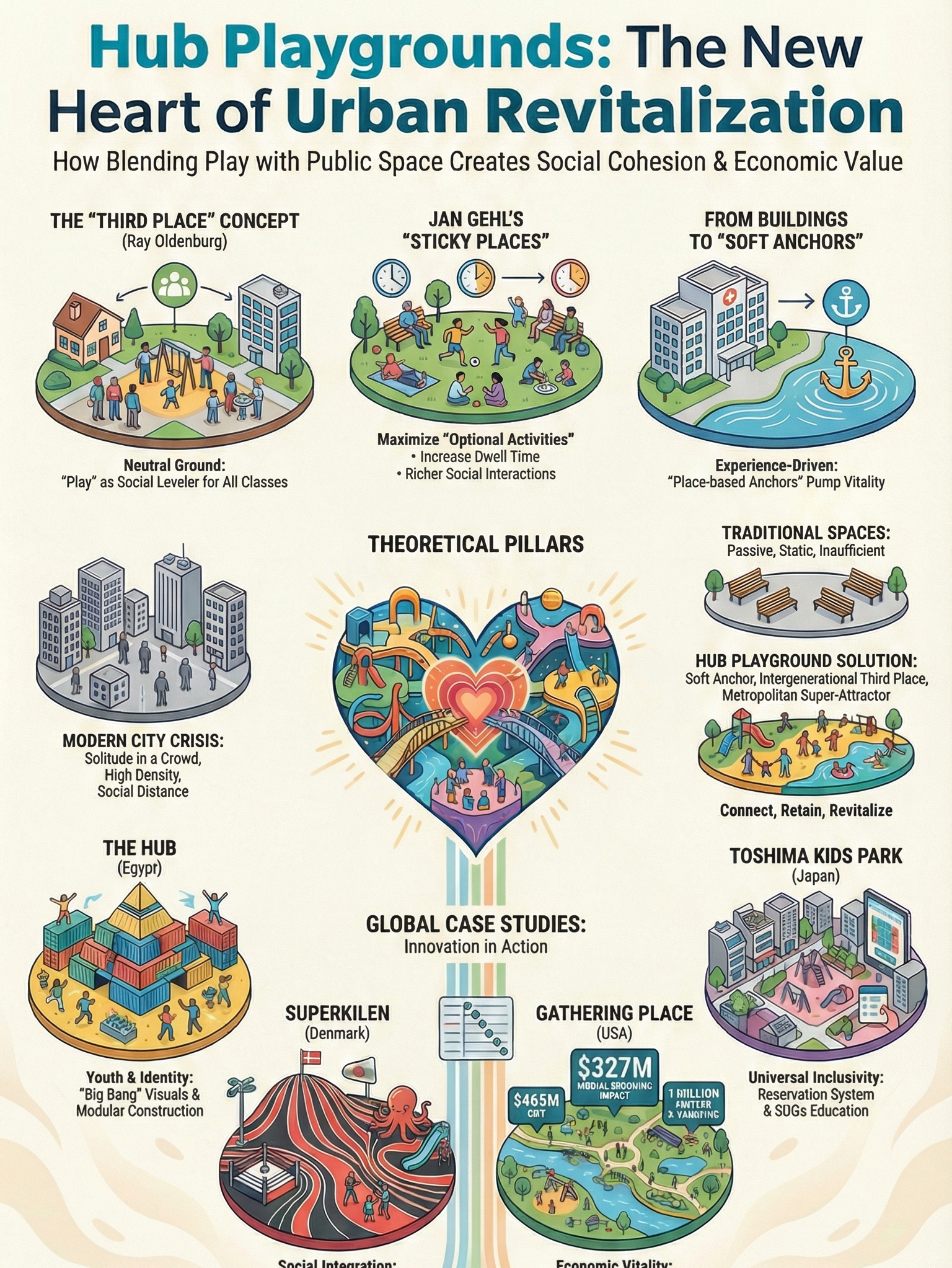
• Chapter 10 rebuilds the 'Hub,' the heart of the city. Possessing a powerful magnetism that draws in isolated individuals, the Hub Playground performs the role of a social melting pot where generations and social classes mix.
• Chapter 11 targets the 'Pocket,' the city's capillaries. By applying small-scale 'Acupuncture' to the blind spots of alleys where grand developments cannot reach, we create a 'miracle at the doorstep' where play begins the moment one opens their front door.
3. Expansion of Time: From Ownership to Sharing
There is a limit to expanding space physically. Therefore, we must focus on the fourth-dimensional resource: 'Time'.
• Chapter 12 proposes 'Chronotopia (Sharing of Time)'. We must unlock the tightly barred gates of schools and government offices and return the city's idle time to its citizens. When we move beyond the exclusive ownership of space to allow temporal access, the city can become twice or three times richer without physical expansion.
4. Conclusion: It Takes a Whole City to Raise a Child
The African proverb "It takes a whole village to raise a child" needs to be revised. In modern society, to raise a child, the 'design of the whole city' must change.
We envision a city where children step out of the backseat to walk on their own, find play in abandoned alleys, and mingle with neighbors in schools late at night. We call such a city a 'Playable City'. And a city that is good for children to live in, paradoxically, coincides exactly with the city where we all wish to live most.
Now is the time to step out of the capsule and draw lines connecting the disconnected dots. Let us begin the journey where those lines gather to form planes, finally reviving into a three-dimensional space of life.
3부 서문. 잃어버린 도시를 찾아서: 고립에서 연결로, 효율에서 공유로
1. 기능주의의 함정: 혈관이 막힌 도시
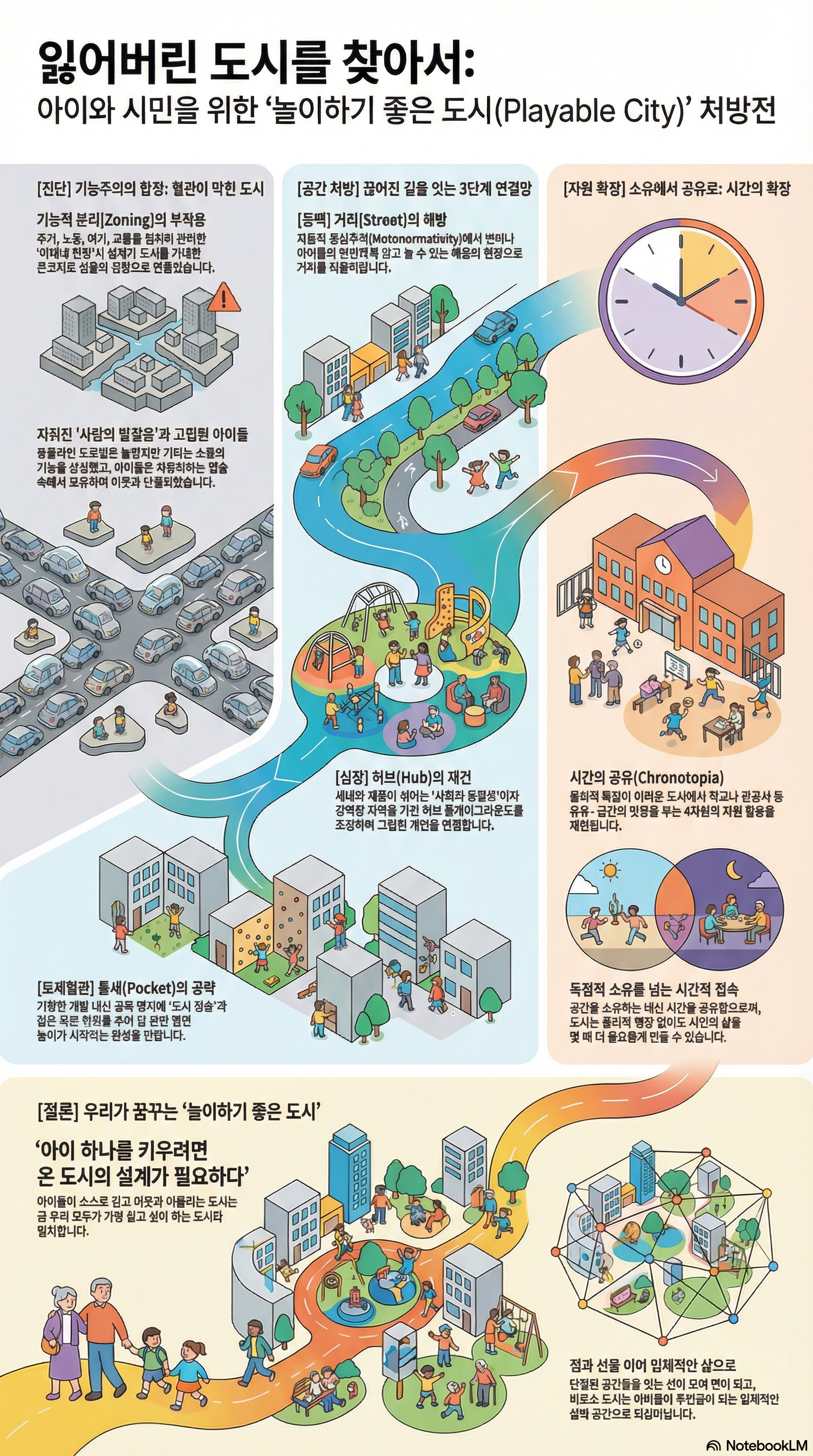
지난 한 세기 동안 우리는 도시를 거대한 기계처럼 다루었다. 르 코르뷔지에의 '아테네 헌장' 이래, 도시는 주거, 노동, 여가, 교통이라는 네 가지 기능으로 철저히 분리(Zoning)되었다. 우리는 효율적인 도로망을 건설했지만, 정작 그 길 위에서 **'사람의 발걸음'**은 지워버렸다.
그 결과, 도시는 거대한 콘크리트 섬들의 집합이 되었다. 아이들은 학교와 집이라는 섬 사이를 자동차라는 캡슐을 타고 표류한다. 혈관(거리)이 막히고 장기(공공시설)가 따로 노는 이 도시에서, 공동체의 온기는 차가운 아스팔트 아래 묻혀버렸다.
3부는 이 병든 도시를 치유하기 위한 **'도시적 처방전'**이다. 우리는 이제 도시를 기능적 기계가 아닌, 유기적으로 연결된 **'생명체'**로 다시 설계해야 한다.
2. 공간의 연결: 동맥에서 모세혈관까지
죽어가는 도시에 숨을 불어넣으려면 가장 먼저 끊어진 길을 잇고, 막힌 곳을 뚫어야 한다.
제9장은 도시의 동맥인 **'거리(Street)'**의 해방을 선언한다. 자동차 중심주의(Motonormativity)를 깨고, 아이들에게 안전하게 걸을 수 있는 길을 돌려줄 때, 거리는 단순한 통로가 아니라 배움과 놀이의 현장이 된다.
제10장은 도시의 심장인 **'허브(Hub)'**를 재건한다. 고립된 개인들을 끌어당기는 강력한 자력(Magnetism)을 가진 허브 플레이그라운드는, 세대와 계층이 섞이는 사회적 용광로 역할을 수행한다.
제11장은 도시의 모세혈관인 **'틈새(Pocket)'**를 공략한다. 거창한 개발이 닿지 않는 골목의 맹지에 작은 침술(Acupuncture)을 놓아, 집 문만 열면 놀이가 시작되는 '문 앞의 기적'을 만든다.
3. 시간의 확장: 소유에서 공유로
공간을 물리적으로 확장하는 데는 한계가 있다. 그래서 우리는 4차원의 자원, **'시간(Time)'**에 주목해야 한다.
제12장은 **'시간의 공유(Chronotopia)'**를 제안한다. 굳게 닫힌 학교와 관공서의 빗장을 풀고, 도시의 유휴 시간을 시민에게 돌려주어야 한다. 공간의 독점적 소유를 넘어 시간적 접속을 허용할 때, 도시는 물리적 팽창 없이도 두 배, 세 배 더 풍요로워질 수 있다.
4. 결론: 아이 하나를 키우려면 온 도시가 필요하다
"아이 하나를 키우려면 온 마을이 필요하다"는 아프리카 속담은 수정되어야 한다. 현대 사회에서 아이 하나를 키우려면 **'온 도시의 설계'**가 바뀌어야 한다.
아이들이 뒷좌석에서 내려 스스로 걷고, 버려진 골목에서 놀이를 찾고, 밤 늦은 학교에서 이웃과 어울리는 도시. 우리는 그런 도시를 **'놀이하기 좋은 도시(Playable City)'**라 부른다. 그리고 아이들이 살기 좋은 도시는, 역설적이게도 우리 모두가 가장 살고 싶은 도시와 정확히 일치한다.
이제 캡슐 밖으로 나와, 단절된 점들을 잇는 선을 그릴 차례다. 그 선들이 모여 면이 되고, 마침내 입체적인 삶의 공간으로 되살아나는 여정을 시작해보자.